

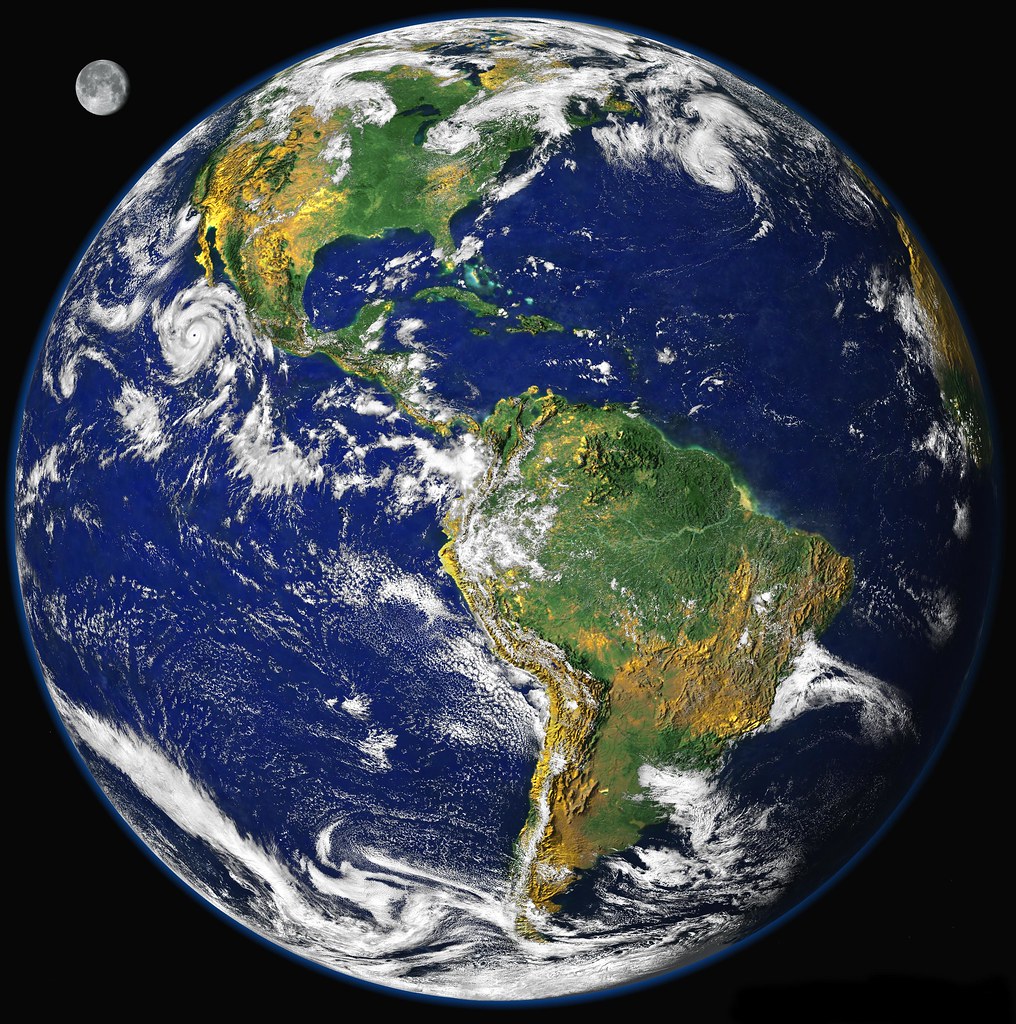
The first part of today’s musing is subjective. I was born with blue and green eyes, which have stayed working well throughout my life thus far. As a youngster I had predominantly a light icy blue colour with hints of green, over the years the green has become dominant with the blue taking up the ‘second fiddle’. The world population clock is now ticking along at over 8.1 billion people https:/www.worldometers.info/world-population/ and current research suggests my predominantly green eye colour is shared by about 2 percent of the world population. Apparently the human eye colour is determined by the amount of melanin pigmentation in the Iris. As many as sixteen genes influence the production, my eyes seemed to have increased melanin production as I have grown older.
Science is currently of the opinion that we all had brown eyes if you go back far enough, then between 40,000 to 50,000 years ago a genetic mutation affecting the OCA2 in our chromosomes resulted in the creation of a ‘switch’ that turned off the ability to create brown eyes. This apparently was one individual, as blue eyed people have this switch in exactly the same point in their DNA. The mutation seems to give no particular evolutionary advantage, more so nature ‘shuffling the deck’.
In a more spiritual context, there is the association with compassion and kindness, an ability to empathise with the pain and joy of others (I tend to substitute ‘other selves’ in at this juncture). Green is a healing colour in my estimation, synonymous with growth and development. This then gives us a link to the very early days of green life on our planet. Would you view life as a competitive struggle for survival? Or as a triumph of cooperation and creativity? Well blue-green bacteria are my pointers to answer this question, inventing arguably one of the greatest and most successful innovations in the entire existence of life.
Back in the day, bacteria were up against it in terms of survival. Harsh sunlight, meteoric impacts, volcanic eruptions, droughts and floods were making it tough for these miniature life scientists, who went about their business of trapping energy, water and food to maintain their integrity. Bacteria could replicate faithfully and with extraordinary speed, plus they were top notch inventors. They invented photosynthesis, which became the primary source of life energy. The first processes used hydrogen sulphide, a gas spewed forth from volcanoes, instead of water as their source of hydrogen, combined it with sunlight and CO2 from the air to form organic compounds and never produced oxygen. By using adaptive strategy, they survived and evolved, creating feedback loops that would result in a tightly coupled system of life and its environment, regulated by bacteria.
As iron and other elements reacted with water, hydrogen gas was released and rose up through the atmosphere, where it broke down into hydrogen atoms. These atoms were too light to be held in the Earth’s gravity and over say a billion years, the oceans would have gradually evaporated. Bacteria to the rescue; in the later stages of photosynthesis, free oxygen was released into the air, as it does today, some of it combined with rising hydrogen gas to form water, thus keeping the planet moist and preventing the oceans from evaporating, hurray!
There is more to this story, our blue-green inventors were also fermenters. We are not talking ethanol, or beers, wines and spirits, rather in the process of producing ATP molecules from sugars, methane and CO2 were produced as waste products. At the dawn of the bacterial age, the Sun was twenty-five percent less luminous than now, CO2 was very much needed in the atmosphere to keep planetary temperatures within a comfortable range. Fermentation and photosynthesis became two mutually balancing processes for the planet. Blue-green bacteria, ancestors of blue-algae, used sunlight to split water molecules into their hydrogen and oxygen components. They took the hydrogen for building sugars and other carbohydrates, emitting oxygen into the air. This extraction of hydrogen from water with resulting oxygenic photosynthesis, was a singular event that would lead to our modern environment.
Around two billion years ago, the volcanic and tectonic sources that captured the free oxygen became saturated, there was ‘oxygen pollution’. Species were being wiped out. Cue the blue-green bacteria, our inventors came up with a metabolic system that required the very substance that had become a deadly poison. There were two complimentary mechanisms at their disposal, the generation of free oxygen through photosynthesis and its absorption through respiration. An efficient way of channelling and exploiting the reactivity of oxygen, essentially controlled combustion. The proportion of free oxygen stabilised in the atmosphere at twenty-one percent, a value determined by its range of flammability. In addition, a layer of ozone gradually built up at the top of the atmosphere to protect the planet from the Suns harsh ultra-violet rays. The stage was now set for larger forms of life.
Knowing the story of our blue-green inventors, I come down on the side of fermenting creativity and cooperation. It is something the politicians could ponder in our current environment, whatever the colour of their eyes.
3 responses to “Musing a Blue/Green Mix”
-
Interesting. I myself have green eyes and I am colour-blind, red/green deficient, something for which I have to thank my maternal grandfather.
And I intensely dislike the colour green, to the extent that I used to give away my green Smarties and, to this day, I still give away the greens in wine gums and other such comestibles. I also refuse to be ‘the green character’ in any board game.
Irrational or what? 🤷🏻♂️
Roger 👍
LikeLike
-
The shuffling of the deck of familial genetics sings from your reply Roger, does the colour blindness irritate, or have you adjusted to the situation over time?
From my maternal grandfather, I would say come my abundant hair, nose and temperament. On my paternal fathers side the male bald gene did not strike me, but it did other males in my nearest and dearest family. My experience indicates that our grandparents genetics play quite a large part in our make up, as well as our parents.
I cannot say I have a dislike of any colour, the only childhood dislike I can call upon was probably my surname, as I used to undergo playground teasing in the form of ‘what it rhymes with’, those days are well back in a draw in the cupboard of memory now. I can imagine you making sure you have any colour but a green cheese slice when starting a game of trivial pursuit! There most likely is a root experience underlying the dislike, could be something oblique rather than directly related to the colour, interesting none the less. Thanks for the response, always an interesting perspective.
-
-
Grandparental genetics do indeed play important parts in our lives, Alan. Colour-blindness is ONLY ever passed down this way, or so I am told. That same grandfather also bequeathed me his early baldness, but he was also a highly intelligent chap (teacher and subsequent headmaster as well as Lord Mayor), genes which he passed to my equally highly intelligent mother, and thence to myself.
I’m really quite fortunate. 😉
Roger 👍
LikeLike


Musing on Jumping Genes
This musing derives from thinking about how labelling things we do not yet understand, such as ‘dark matter’ and ‘junk DNA’ can be viewed from an alternate perspective. I have been doing a little reading on DNA research and was interested to discover that the original ‘junk DNA’ label, first utilised in the 1960’s and…

Musing on the Traditional Story
“Bring on the night, I couldn’t stand another hour of daylight” A line from a song ‘Bring On the Night’, composed and performed by the pop band ‘The Police’ in 1980. Rather than dealing with depression, one can interpret this line uttered by an impatient member of an audience, waiting for the next story to…
Most influential teacher?
My short answer is Nature, an open book for those who coose to read it. One could saywe are all teachers and learners, sometimes both at the same time. Within a school environment, perhaps the most influential class teacher would be one who inspires the student, at the very least encourages potential.

 Root, Trunk, Branch, Twiglet
Leave a reply to Alan Kelley Cancel reply